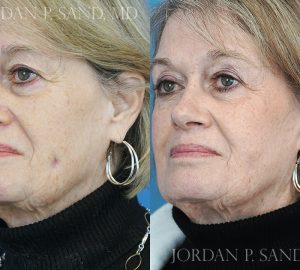

Facelift
Procedures offered at our clinic in Spokane: facelift, deep plane facelift,….


Hair loss affects millions of people across the US each year. Many types of hair loss exist, from alopecia to fungal scalp infections and even medication side effects. While some are only temporary, some lead to permanent hair loss, which can lower self-esteem and quality of life. In the past, hair replacement surgery was the only option for these people, but, today, there’s good news! There are many non-surgical treatments for hair loss out there.
You’ll find a wide range of topical treatments on the market, such as Rogaine (minoxidil), as well as vitamin shampoos, and more. These applications are designed to slow down hair loss and stimulate the growth of new hair. For instance, minoxidil helps prolong the growth cycle of each follicle to help reduce hair loss.
When it comes to non-surgical treatments for hair loss, you also have access to oral therapies, such as finasteride (Propecia and Proscar). This medication is designed for men, although some doctors prescribe it for women. However, because it affects testosterone, there is a chance that if a woman becomes pregnant while using the medication, it could cause birth defects. Spironolactone (Aldactone) is another oral medication that can be used to treat hair loss, although it may also cause side effects for women.
Another non-surgical treatment for hair loss is PRP, or platelet-rich plasma injection. This treatment involves no medications, and actually uses the patient’s own blood. Platelets and plasma are harvested from a blood sample and then administered through a series of injections directly into the affected areas of the scalp. In most cases, treatment only requires about 10 minutes and has no downtime. The theory behind PRP is that the growth factor contained in the plasma and platelets will stimulate new hair follicles in the scalp, thereby combatting hair loss. Most patients will have three treatments sequentially, with a follow-up appointment roughly six months later.
Lasers are being used in a wide range of health and medical treatments today, and hair loss is no exception. Low-level laser therapy, or LLLT, can be used to help slow down the rate of hair loss, as well as to encourage new growth. While the exact mechanism is not well understood, LLLT has shown results, with some patients seeing new hair growth and reduced hair loss in as little as six months. The treatment itself takes about 15 minutes and will be repeated three times. For patients worried about using laser light on their heads, the treatment does not cause any discomfort.
While there are several non-surgical treatments for hair loss, they are not all the same. In addition, they may not benefit all patients. For instance, individuals dealing with complete baldness may not see results from LLLT or topical treatments. For others, surgical treatments may be a better option. Ideally, you will work with a hair loss specialist who understands the full range of treatments, how they work, and how applicable each might be in your particular situation. There is hope to have a full, healthy head of hair once more, and it may not require surgery at all.